%
Project
Virtual Labs
[Redesign]
Remote science learning made accessible and interactive
Why do students avoid using the lab platform as an active learning tool? I worked redesigning a platform that students would actually return to.
Double 2nd Position at IIIT Hyderabad Felicity Hackathon ‘25
Team Size
Team of 2
My Role
Product Designer
Project Domain
Ed-tech
Duration
7 Day Sprint, 2025
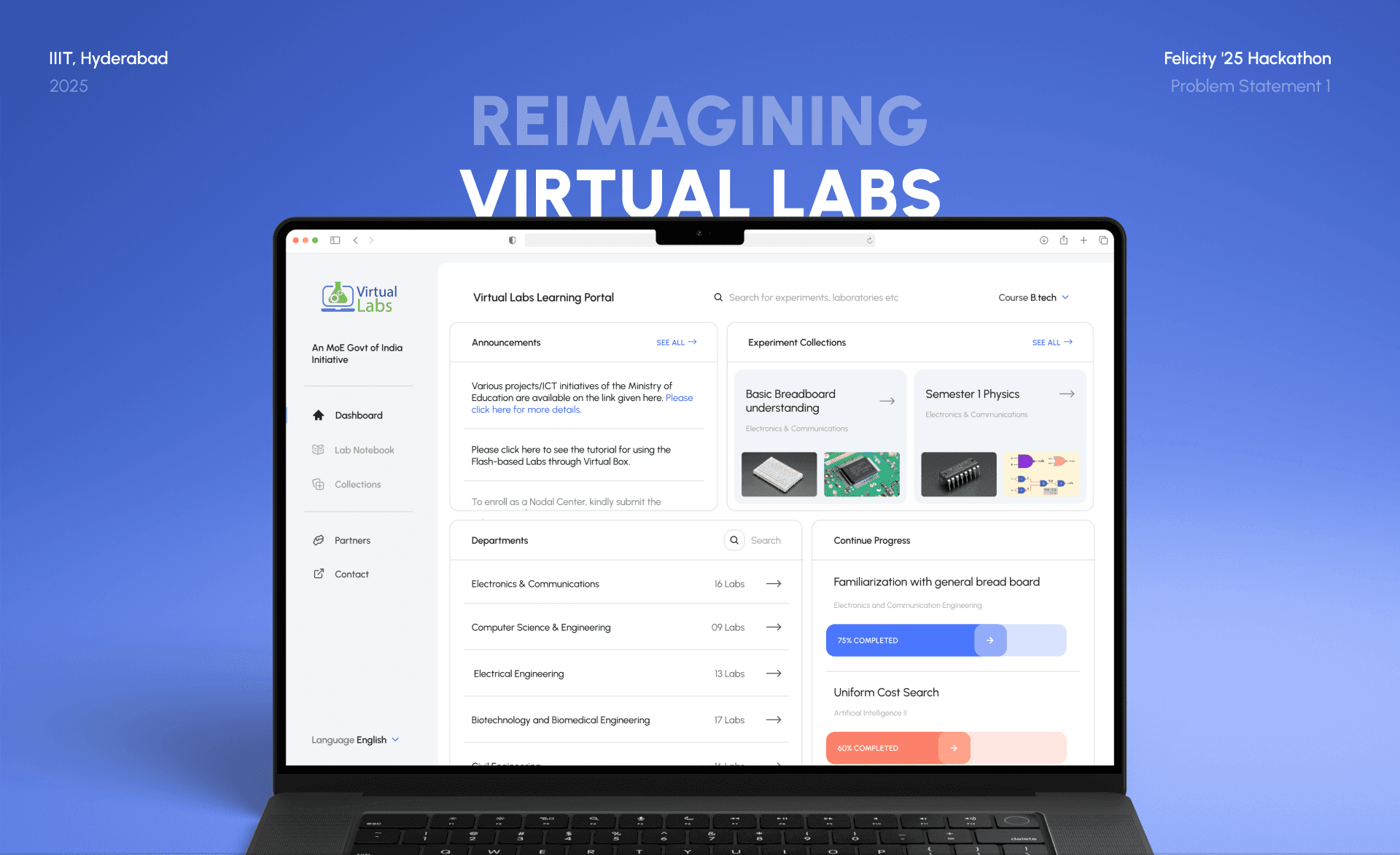
IMPACT
Built confidence via personalised learning
Lightweight personalisation based on cookie system to reduce learning barrier, support self-paced learning, creating an environment that builds confidence and reduces friction.
Reducing complexity with stronger information architecture
Aligning navigation of platform to match the mental models of students working in real labs. Clearer structure with reduced cognitive load, specially for new and mobile users.
EXECUTIVE SUMMARY
THE LINKEDIN SECTION

The Challenge
Why it matters
Our Approach
Outcome
Despite its very high learning potential to enable learning, Virtual Labs struggled with poor engagement and low voluntary usage.
The platform existed. Adoption didn’t.
1
Poor discoverability across experiments
2
Overwhelming navigation structure
3
Mobile experience not built for real student behaviour
4
Lack of modern aesthetics, making it feel outdated
CONTEXT SETTING
THE LINKEDIN SECTION
Virtual Labs was built to provide access to high-quality engineering experiments across India. For many students, especially in institutions with limited infrastructure, this platform became the only way to experience hands-on learning remotely.
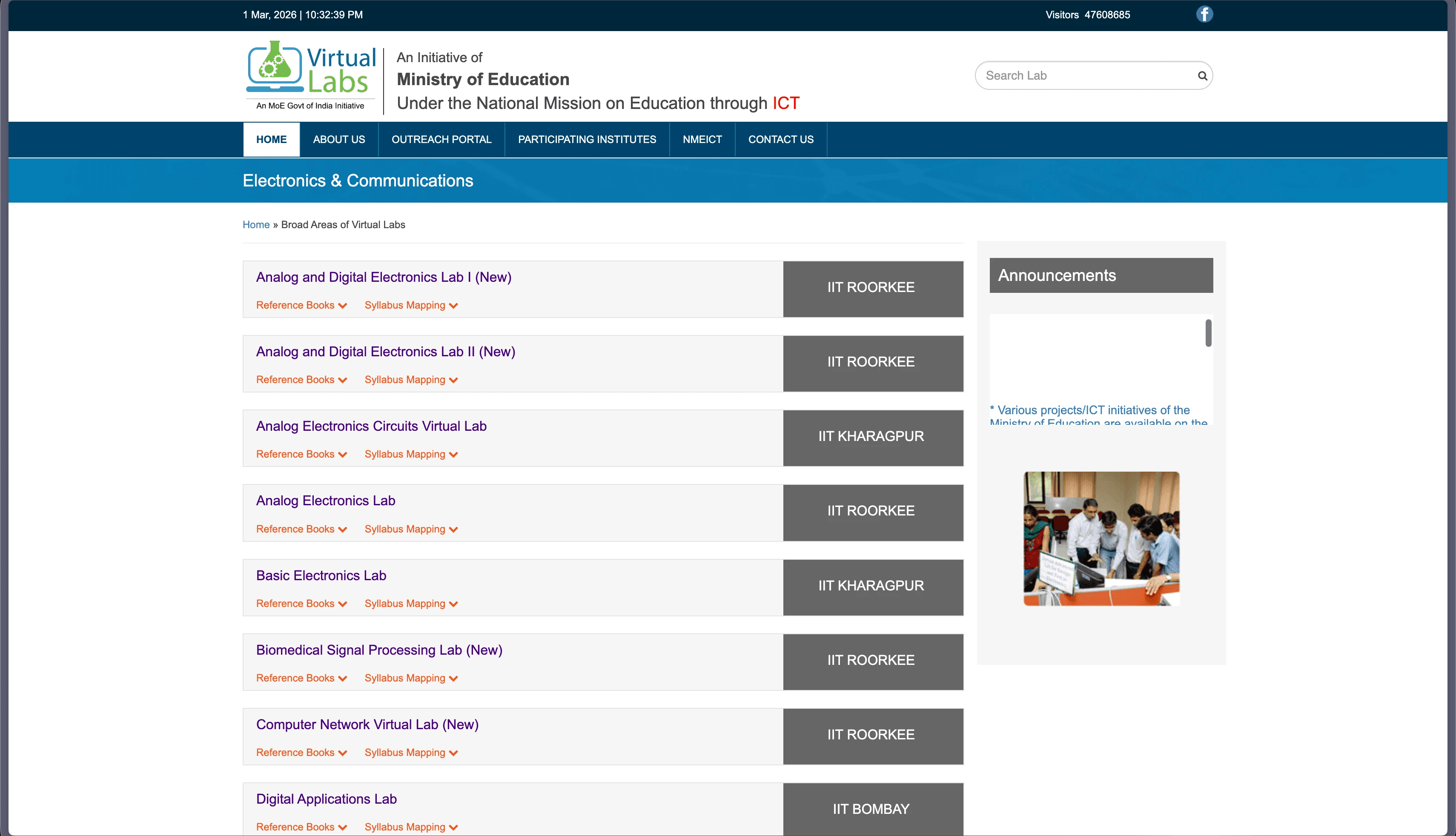
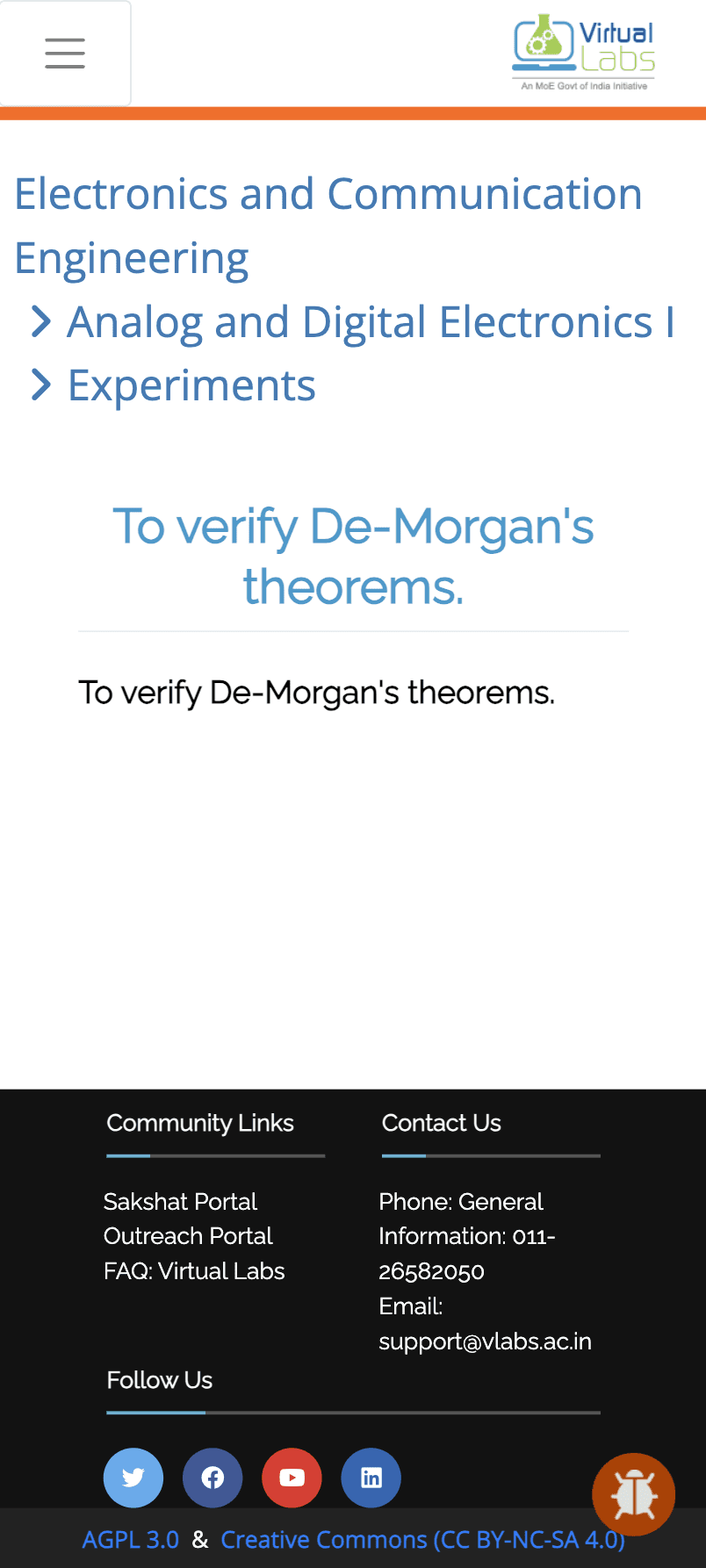
Over time, the platform scaled significantly, hosting hundreds of experiments across domains and reaching millions of users. However, this growth happened in a content first experience later manner, leading to a fragmented and inconsistent interface.
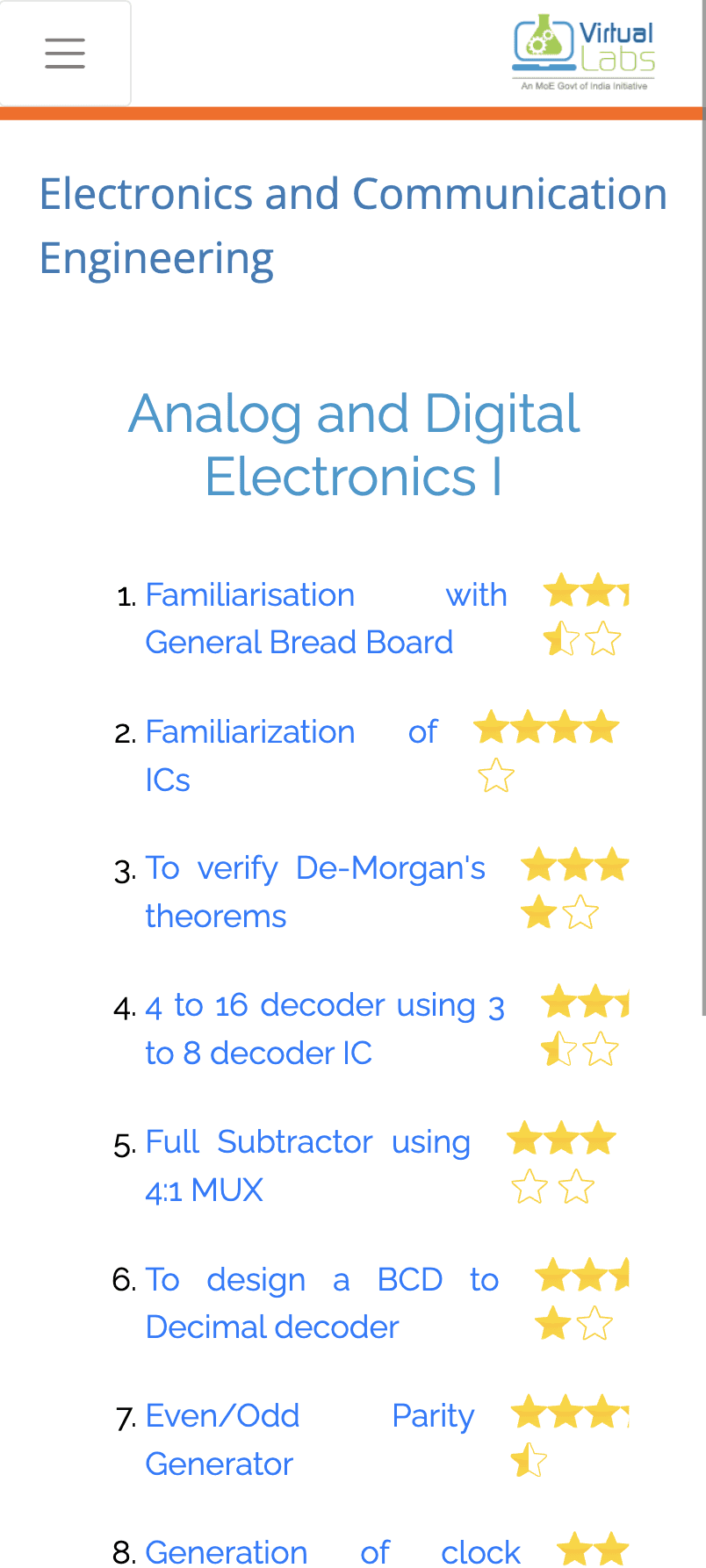
This resulted in:
Difficult and confusing navigation
Dense and overwhelming content presentation
Poor mobile usage
Minimal engagement and motivation
Zero personalisation
RESEARCH PHASE
THE LINKEDIN SECTION
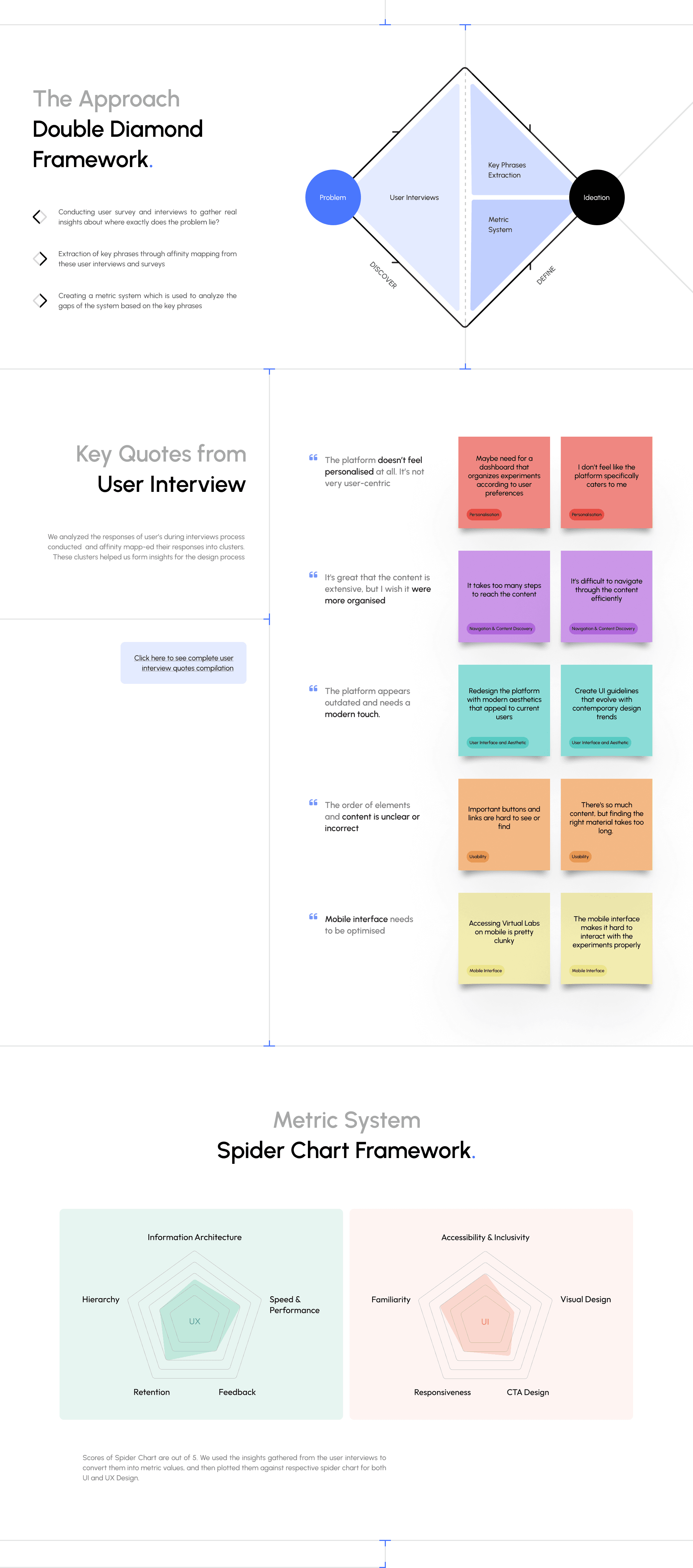
Based on the brief we had received from the competition organisers, our research primarily centred around these three objectives:
Analysis of existing user interface via heuristic principles
Mobile usability analysis
Opportunity mapping for feature innovation
Please note: In certain places I've attached direct screenshots from my actual project presentation deck, such as below, because of which it might have a different layout format
Research Outcomes
STRATEGY & DESIGN PRINCIPLES
THE LINKEDIN SECTION
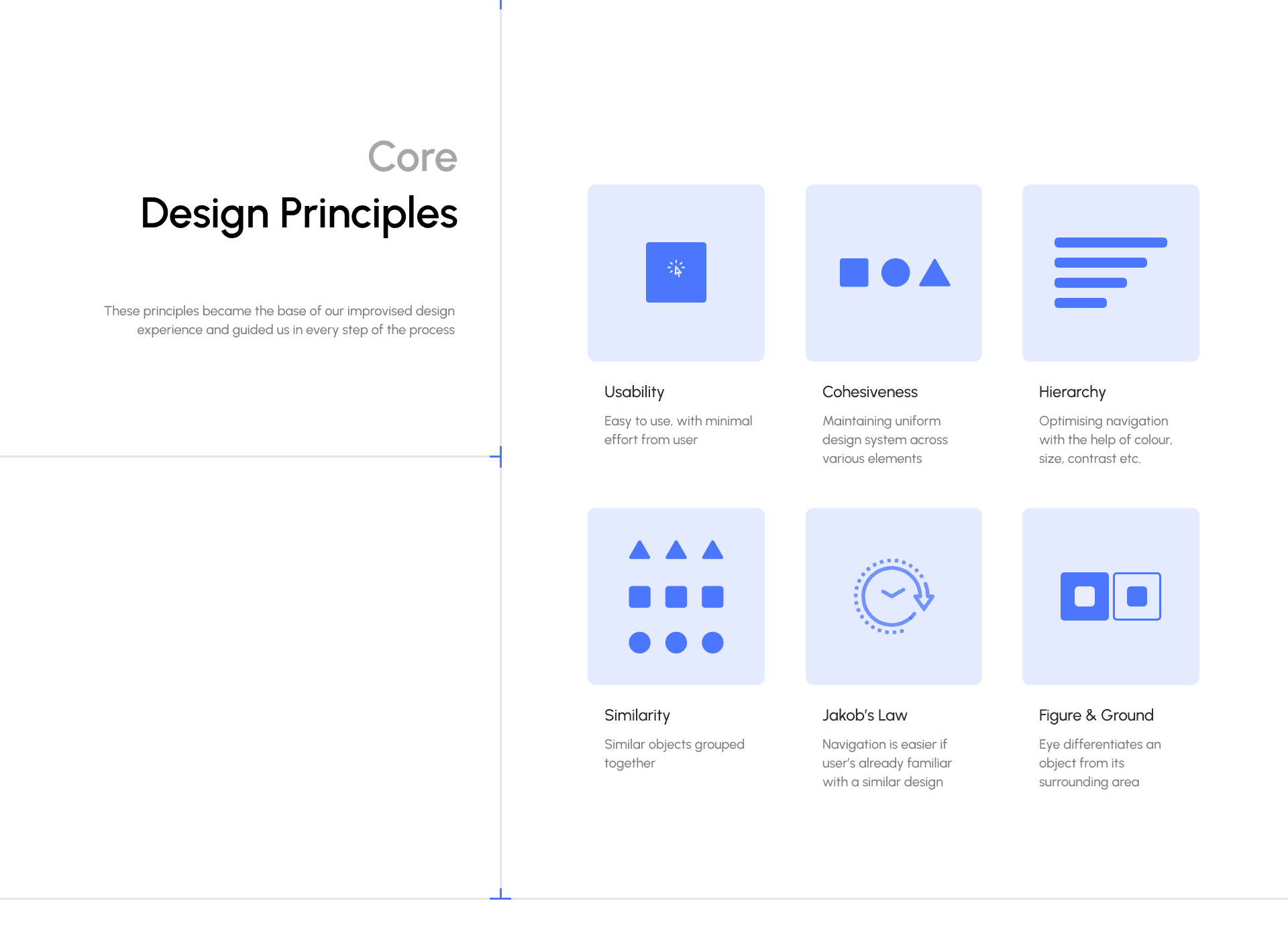
Reduce friction in navigation before
designing for visual enhancement
Focus on content accessibility and clarity.
Design for mobile usage
54% of the users logged into the platform via
their mobile devices.
Personalization without login
Provide personalised experience to the users without having
to go through login to prevent drop offs. Enables continuity
Build confidence progressively
Use micro animations and progress indicators to build
confidence within the user
Design Principles
INTRODUCING VIRTUAL LABS 2.0
THE LINKEDIN SECTION
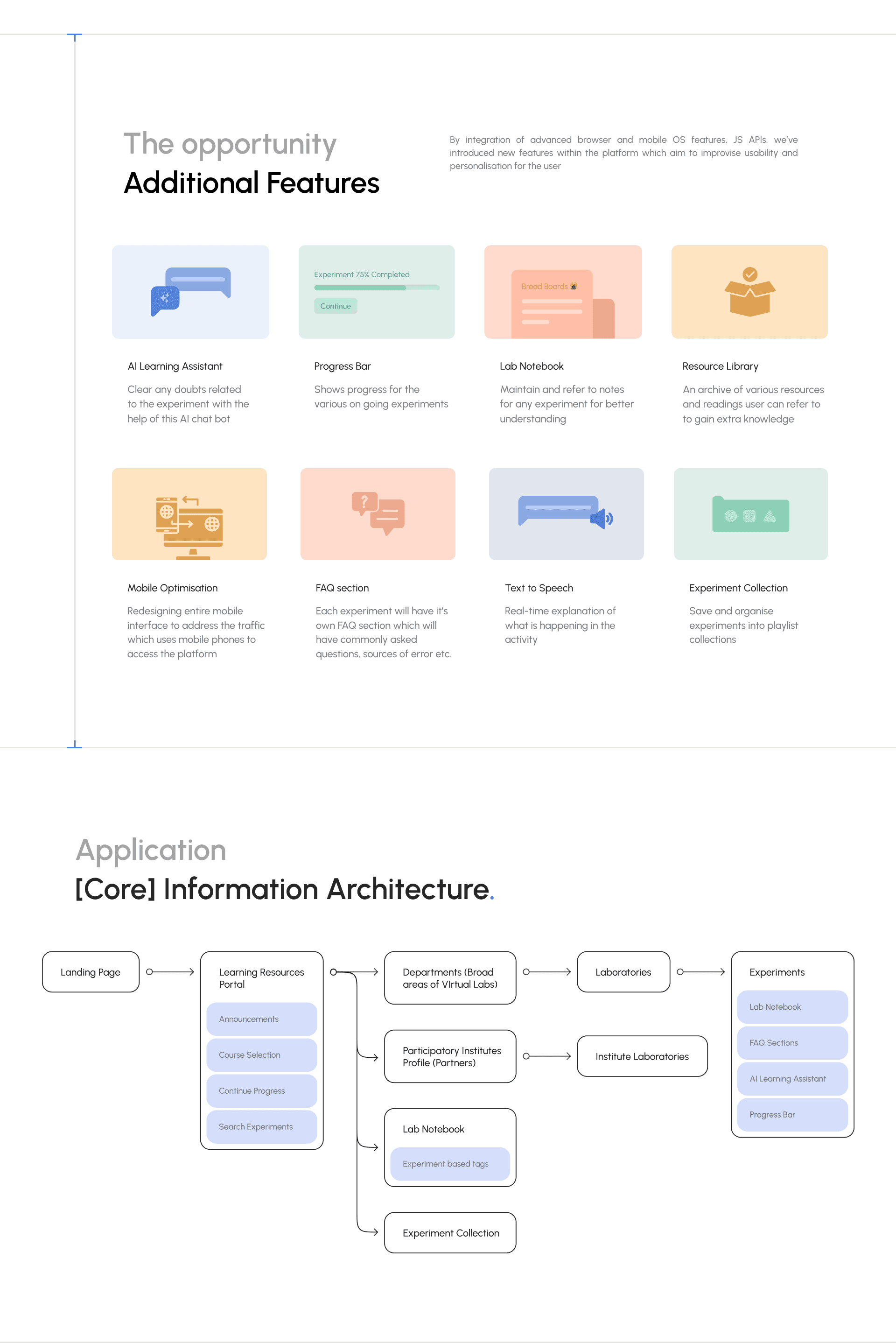
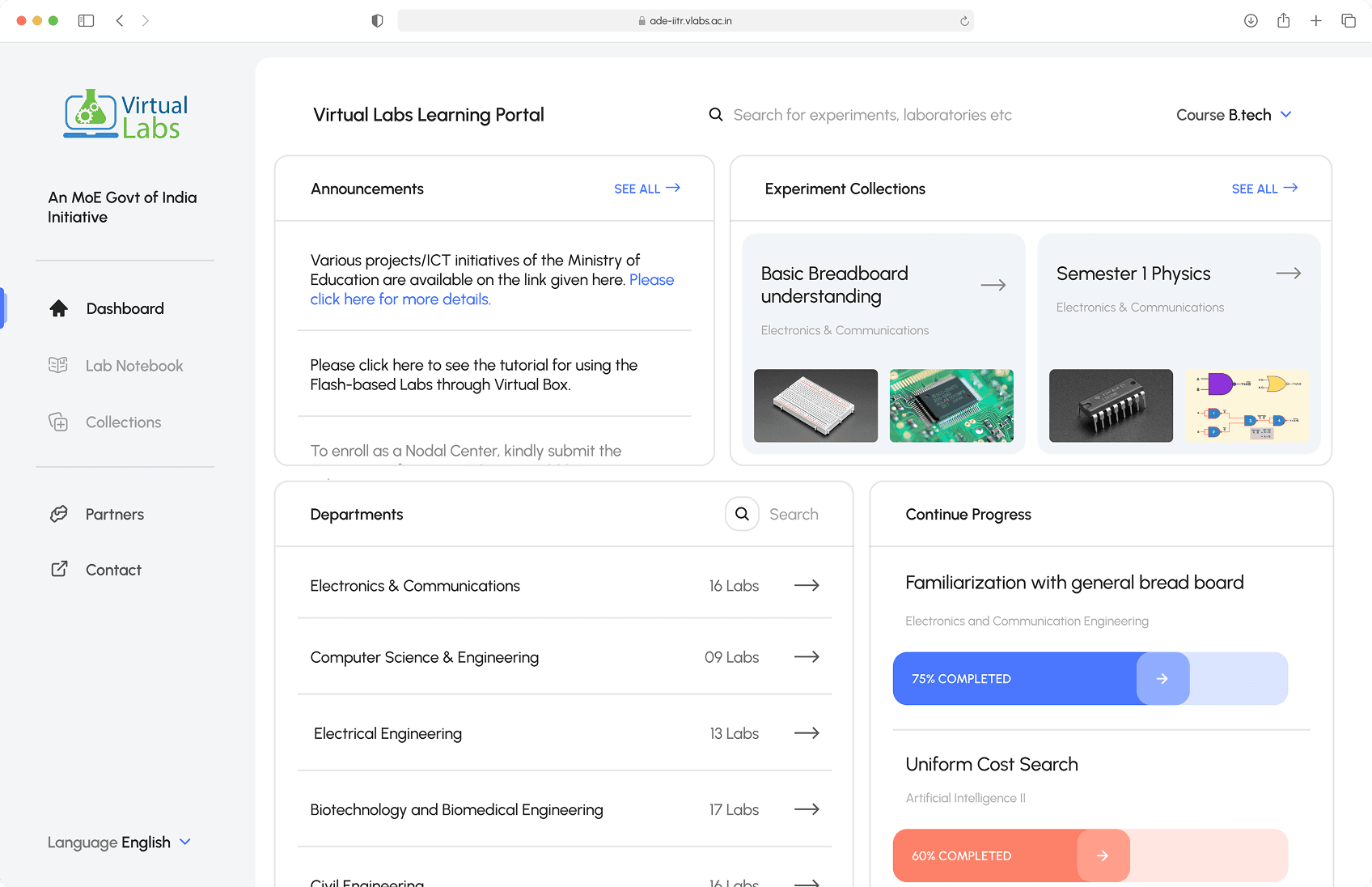
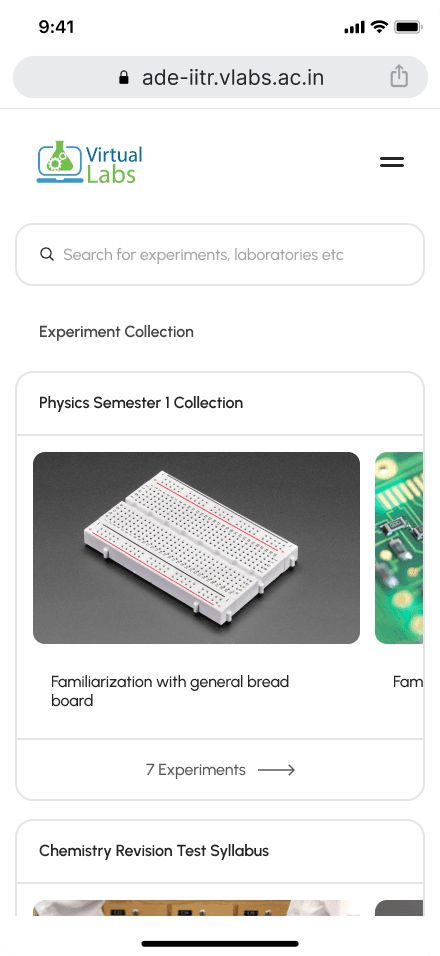
Dashboard
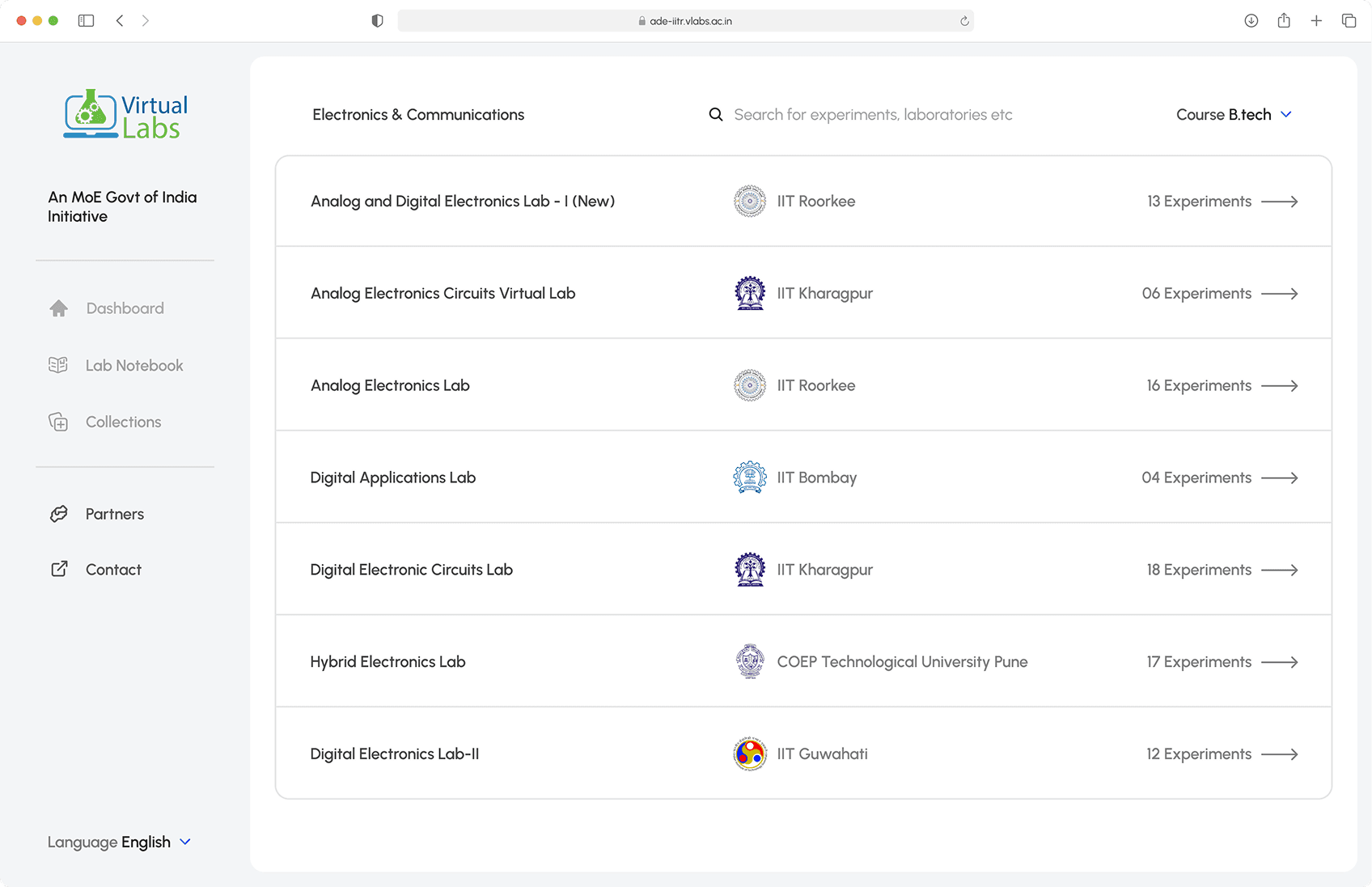
Specific Department
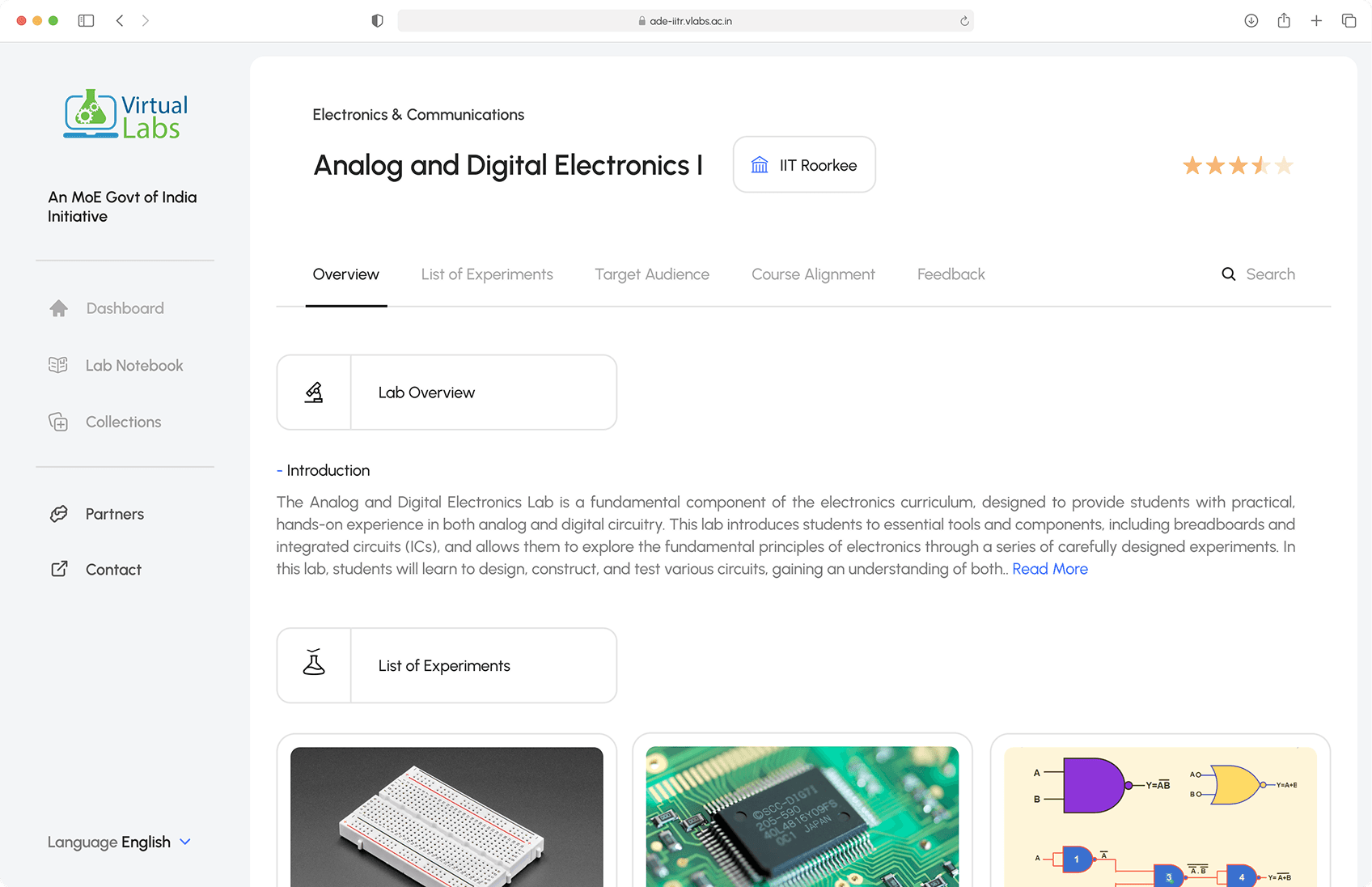
Specific Lab
Opening a lab under specific department
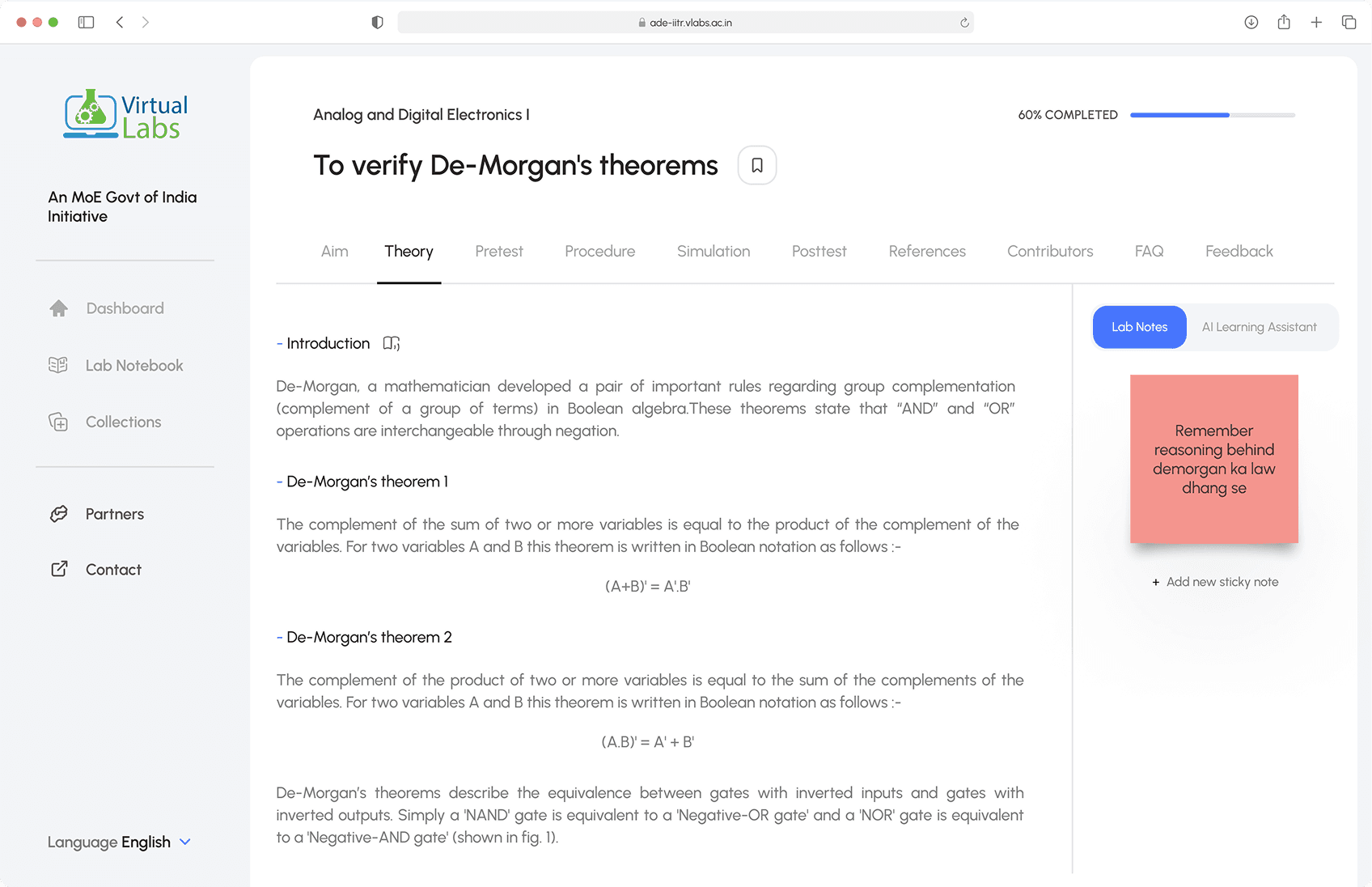
Experiment Theory
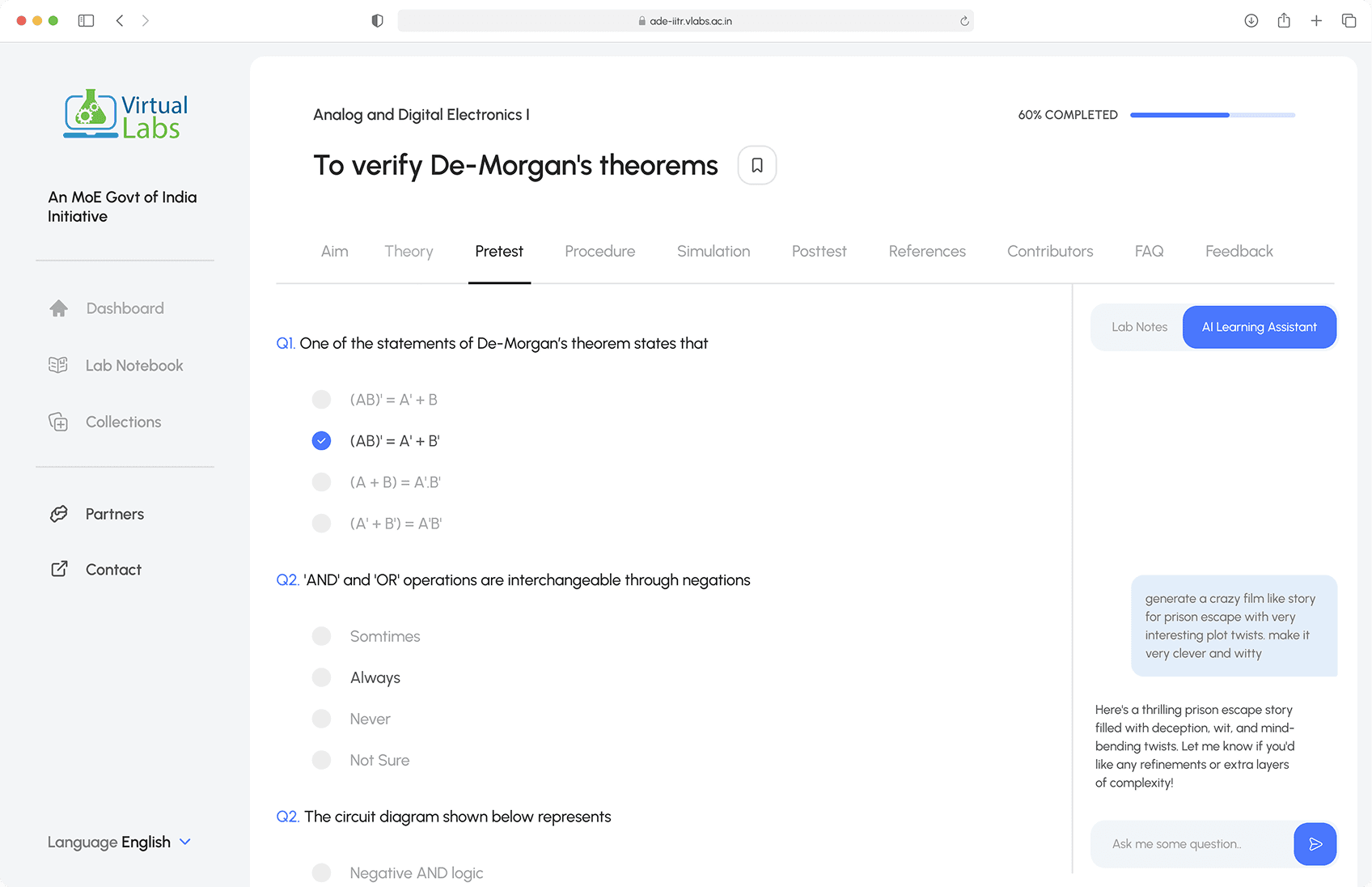
Experiment Pretest
Experiment User Interface
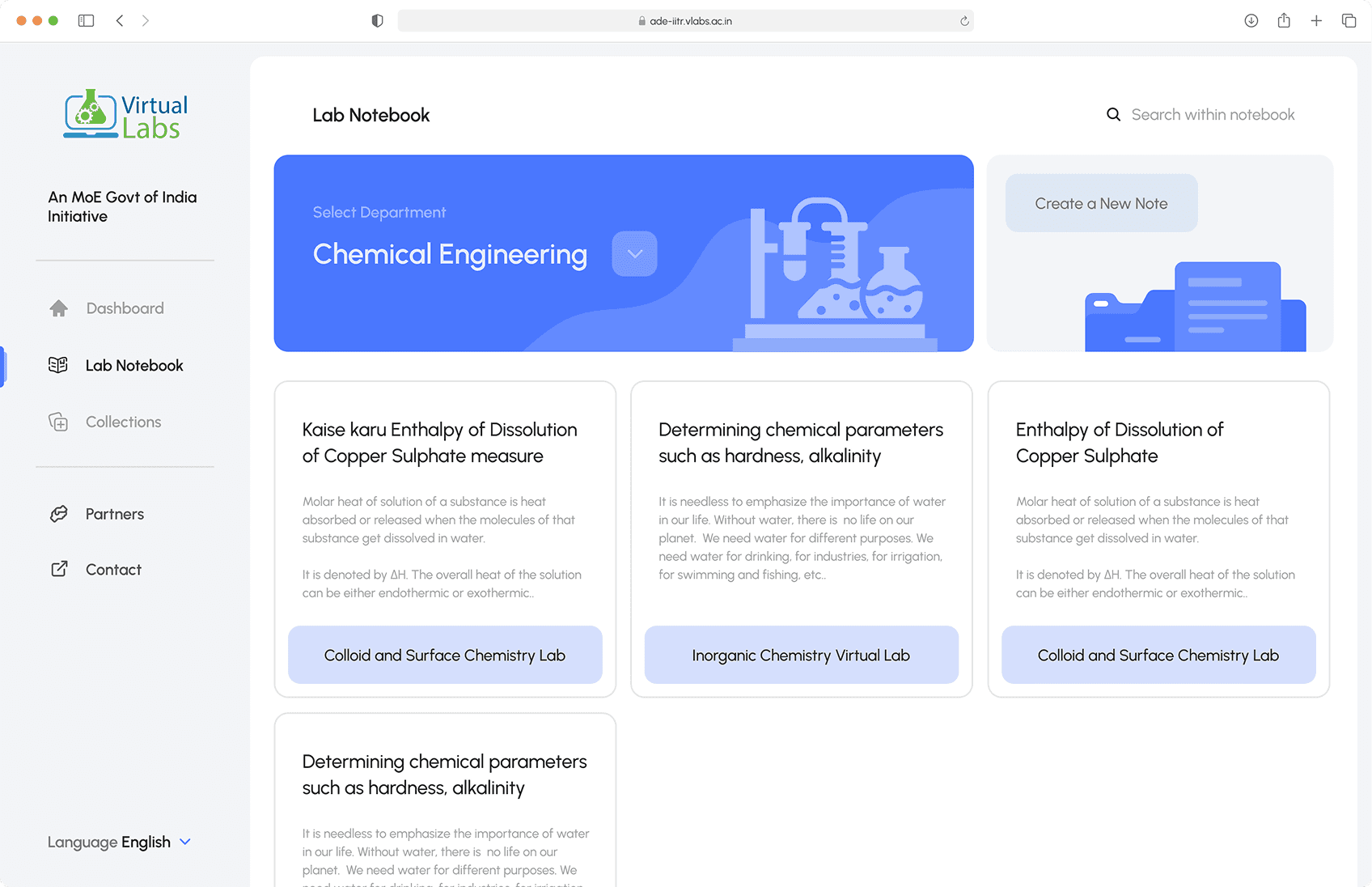
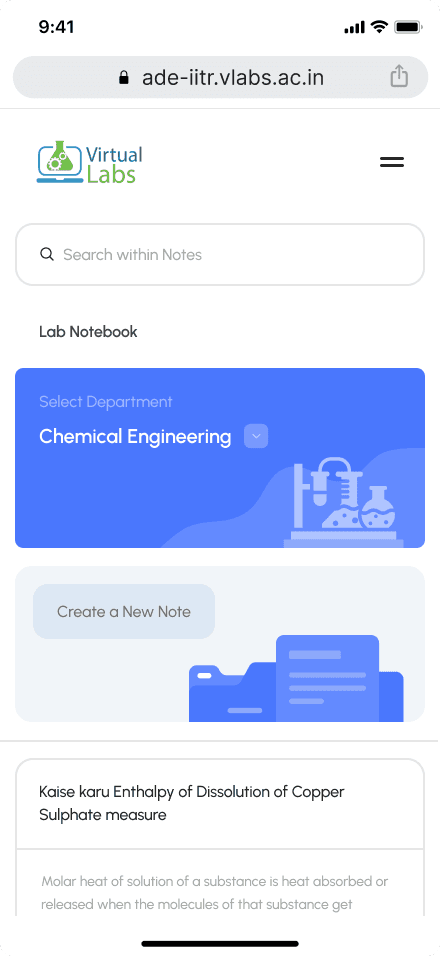
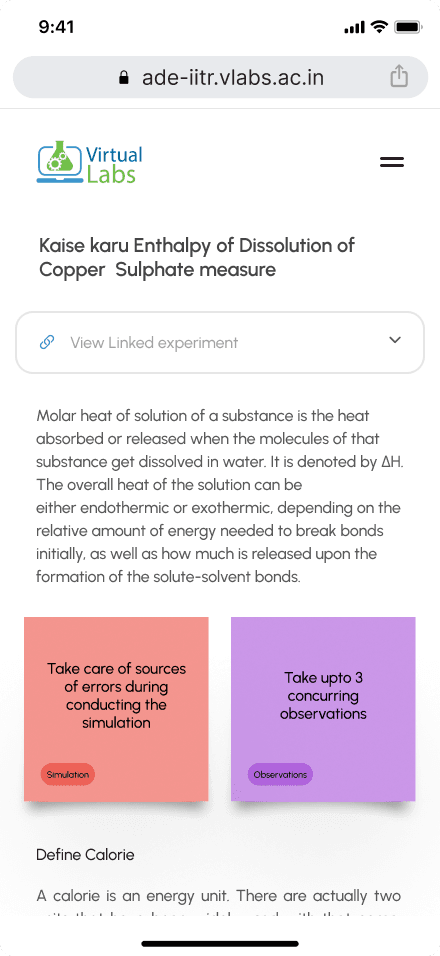
Lab Notebook
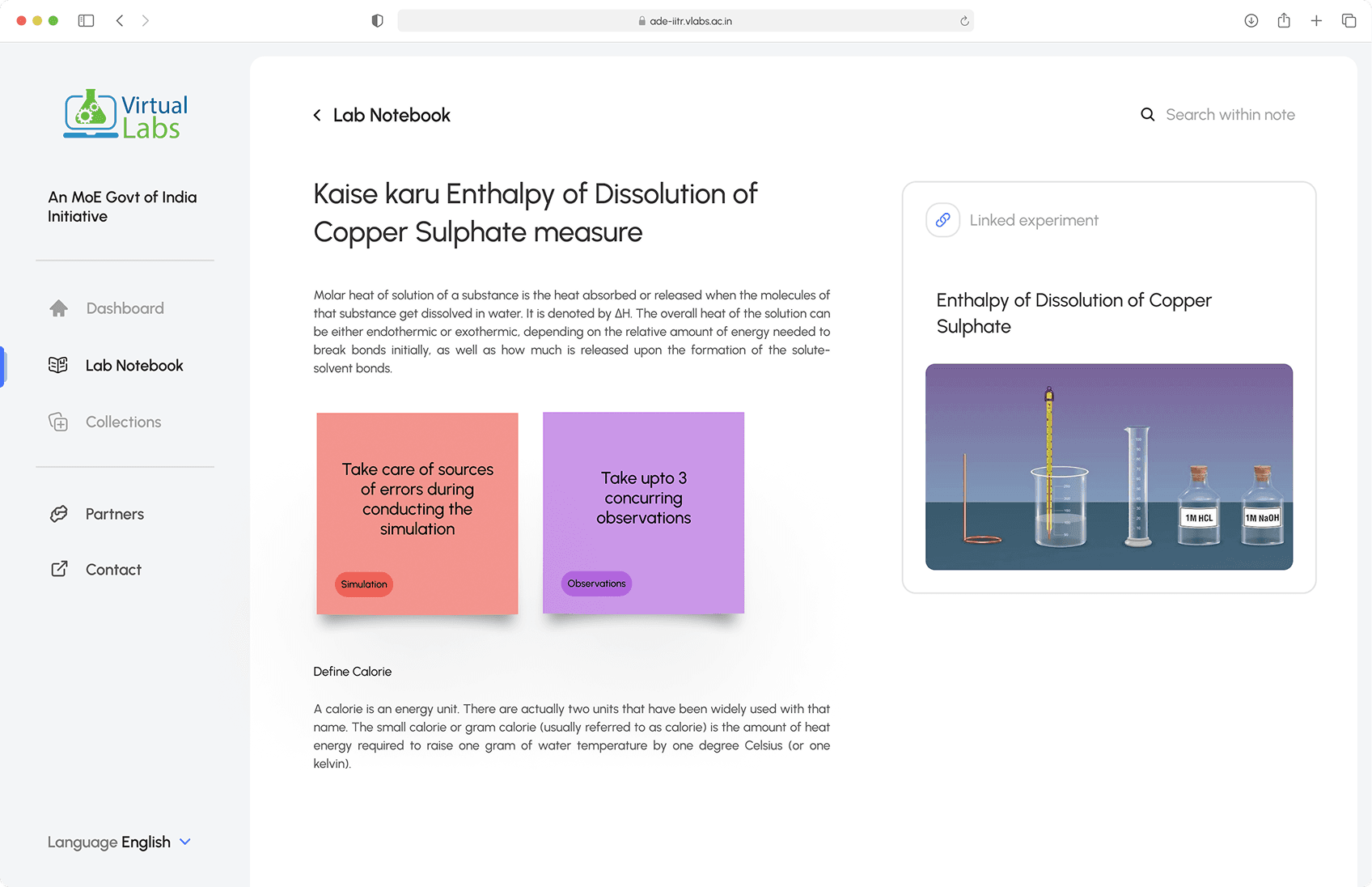
Lab Notes
Lab Notebook User Interface
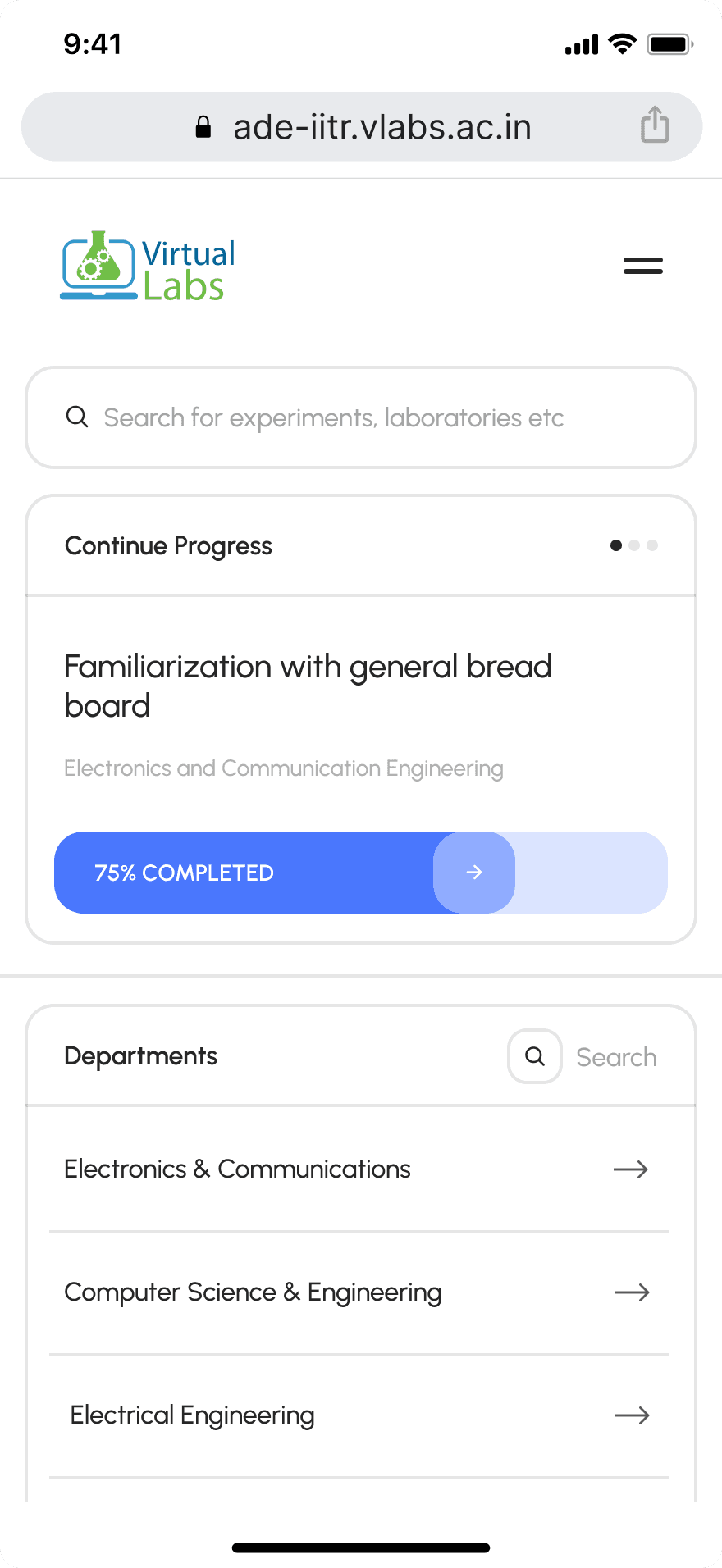
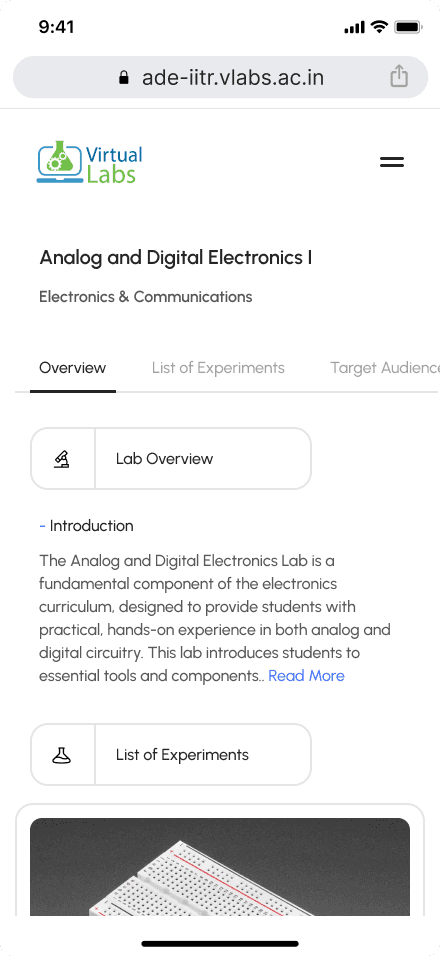
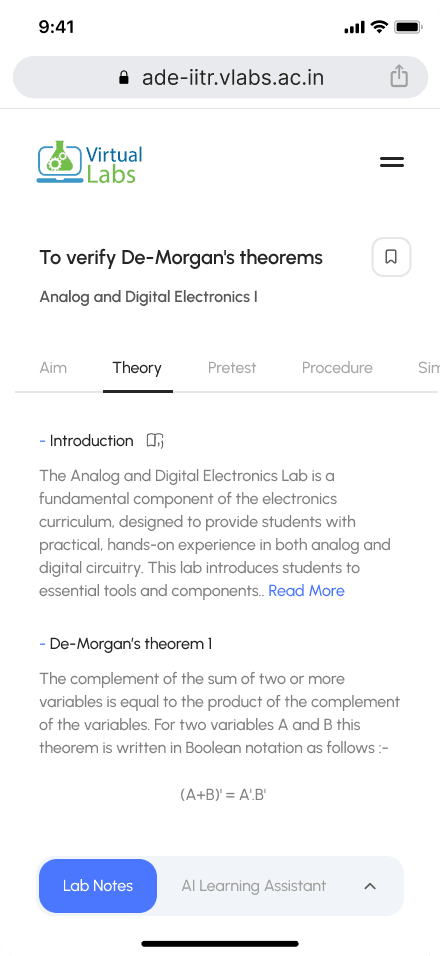
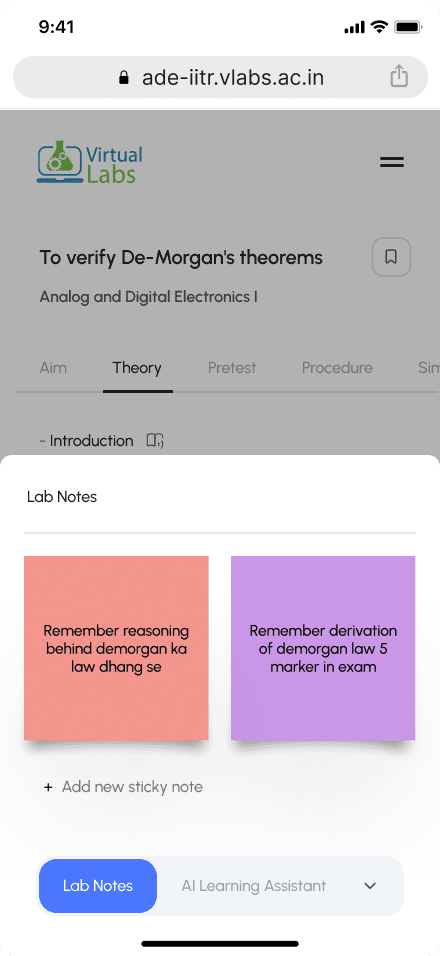
Mobile User Interface
DESIGN VALIDATION & JUSTIFICATION
THE LINKEDIN SECTION
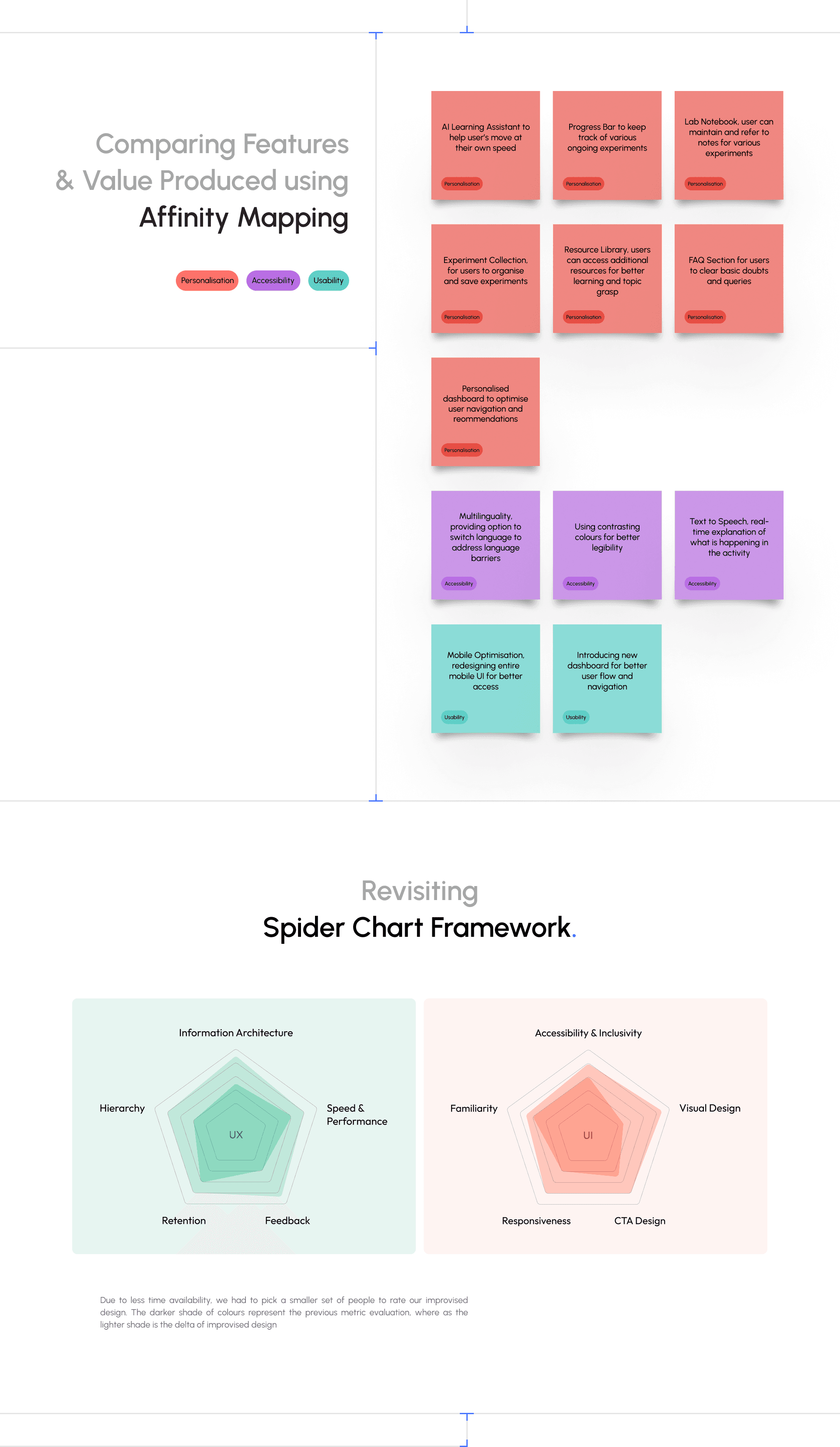
Due to the hackathon timeline, we conducted rapid usability testing which focused on the following,
Concept validation via peer testing using low-fidelity
Heuristic evaluation
And these were the key insights that we got from the testing,
Easier navigation, reduced confusion of platform structure
Users found value in personalisation without going through logging in, improved perceived relevance
Reduced steps reduced drop off tendency
REFLECTIONS
Designing for retention
Initially the brief simply focused on engagement, but I realised the bigger opportunity was retention. How do we make the users come back? Not only when they need to, but rather as an active learning tool?
These made me think around,
Progress visibility
Personalisation without barriers
Continuity across sessions
Designing for retention helped me understand how to design for behaviour, anticipating the needs of the user before they occur
Thinking in terms of scalability
Virtual Labs is an ecosystem of 700+ experiments, used by lakhs of students. It forced me to think in terms of system, not just screens. I started asking questions like how does the experience stay coherent as more labs get added? How does a student discover the right experiment among 100s of experiments? It was about figuring out the navigation patterns, information architecture structure, and understanding mental models of the users.
Retention should not be enforced, it should be earned through continuity and care for the user.
Explore more of my work
If you’re still scrolling,
I think we are getting along.
Happy to talk about design, products & ideas
utkarshdugar2006@gmail.com
Where I use proper
punctuation
Behance
My project dump
I’m actually online here
Disconnect
Play Dino Jump